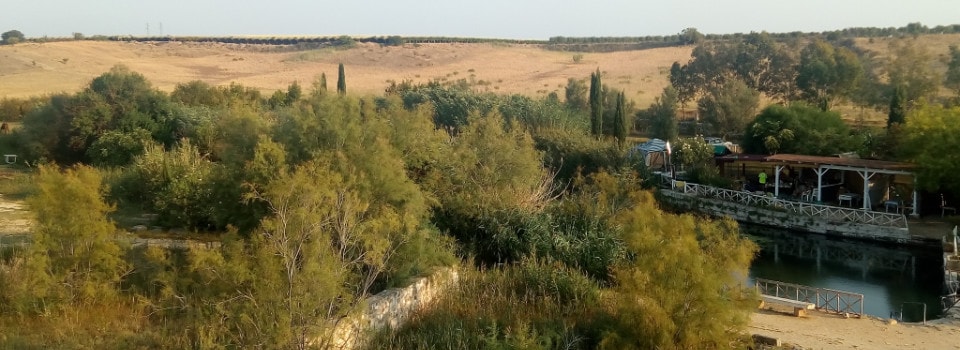
A little more than a km from the La Vela Marsh, along the Circummarpiccolo Road, there is the short Cervaro river. The river, in the past, is mentioned together with the Galeso and the Rasca for their fish: in its waters they fished the "gobbioni crivajuoli". A temple dedicated to Diana stood nearby.
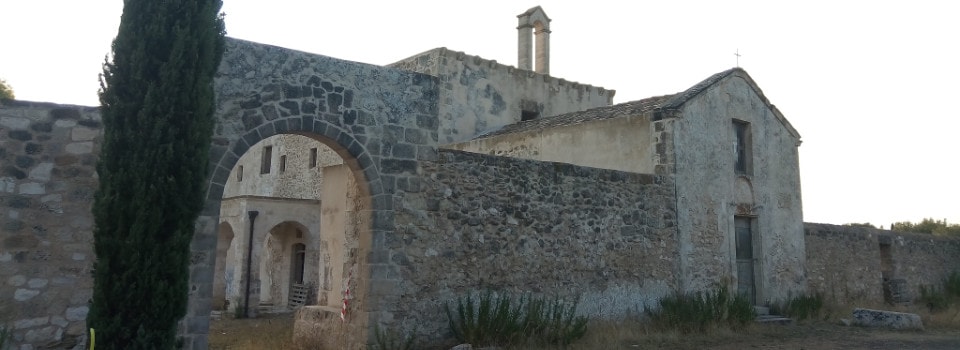
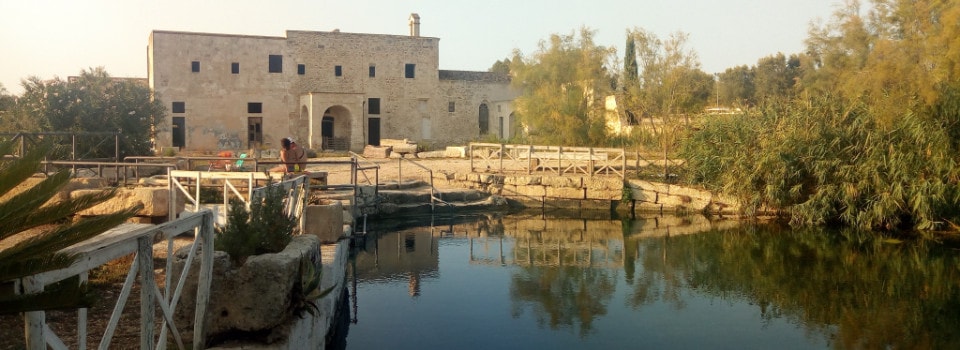
The river has its source a few tens of meters inland, in the form of a rather large source eye, surrounded by plants of Typha latifolia (a perennial herbaceous plant, also called broadleaf cattail or common bulrush, common in the swampy zones, up to 3 m tall, has linear leaves and spadix inflorescence). A few tens of meters from the source of Cervaro, stands the complex of the convent Battendieri, built in 1597 . Between 1533 and 1536, the Capuchins had built a convent "in loco veteri Cappuccinorum" in the area of the Galeso; twenty years later they abandoned it, because of the swamping of the river and the inhospitability of the place. The convent on Cervaro housed a few friars who in the fulling plant (workshop used for the fulling of wool where a machine moved by a hydraulic wheel with hammers beat the cloth) worked to the fulling of wool (operation by which they soften the wool cloths , subjecting them to pressure). The work at the fulling plant was very hard; the wool was of poor quality, the softness of the old wool was only a memory and, even after the fulling, the fabric was shaggy. After being degreased, washed and hardened, the fabrics were distributed to the other convents of the capuchins. The land was donated by the noble Francesco Marrese, with clause of withdrawal in case of abandonment of the friars. They built: a small church, a hut, with barrel vault, very simple, small rooms with sacristy, refectory, kitchen, workshops for processing wool, eight cells on the upper floor and other small amenities; The large cistern was probably built after the abandonment of the Capuchins two and a half centuries after the construction of the convent which was confiscated in 1867 and became a privately owned farm. The entire complex was enclosed in a dry boundary wall interrupted by the facade of the church and by a lowered arch portal. Detached from the convent, was the gualchiera, contiguous to a well tower circular on a pool of spring water, with windows and a staircase for access to the upper part.
Located in the second corner of the Mar Piccolo in Taranto, for many years a WWF oasis and a recently oriented regional reserve, the oasis La Vela is a treasure for the natural heritage of the city of Taranto. The flora is very rich mainly of halophilic type (formed by species adapted to live in the brackish environments) and even more rich and interesting the fauna characterized both by sedentary species (grey herons, egrets, cormorants, etc.) and migratory (flamingos, knights of Italy, volpoche, avocets, spatulas and many others).